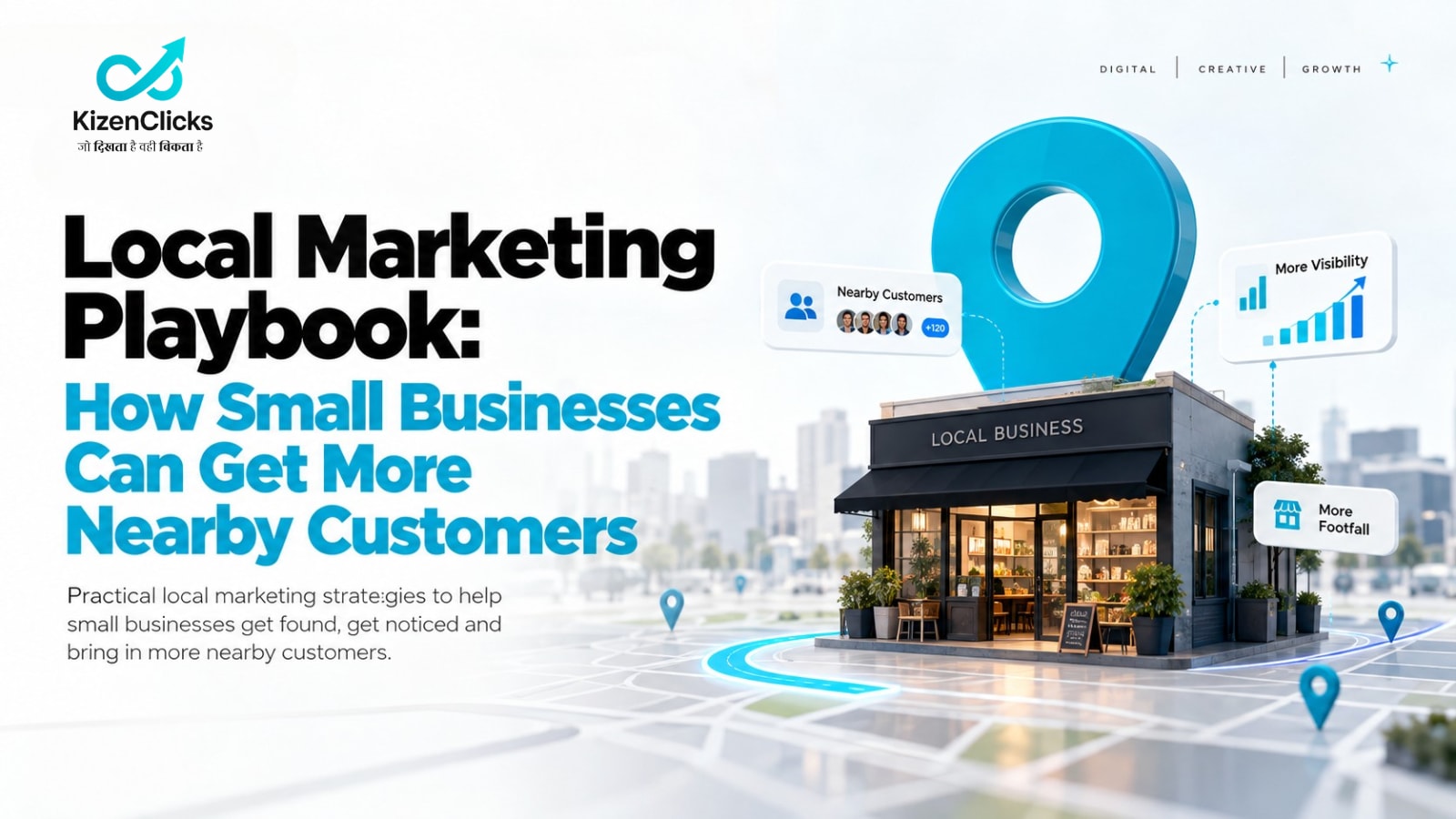
For a local business, marketing does not happen in one channel. A customer may discover you on Instagram, check your Google profile, read reviews, visit the website, compare prices and only then decide whether to call, book or walk in.
Local business marketing works best when those touchpoints tell the same story and make the next step easy.
1. Own the searches closest to purchase
Start with the searches people use when they are ready to act: service plus location, “near me” queries, opening-hour searches, product availability and category terms. Make sure your website and business listings clearly describe what you offer and where you operate.
Create dedicated service or location pages when there is enough unique information to make them genuinely useful. Avoid copying the same paragraph across multiple areas.
2. Treat your Google Business Profile like a landing page
Keep categories, hours, phone number, website, address, services and photos accurate. Add current images that show what a customer can expect. For restaurants and retail businesses, visual freshness can be especially important because customers are often deciding where to go right now.
Your profile should reduce uncertainty before the customer even reaches your website.
3. Build a review system
Reviews influence trust because they provide evidence from other customers. Create a simple process for requesting feedback after a successful purchase or service. Make the link easy to access and train staff to ask consistently without pressure.
Respond to reviews in a way that sounds human. Thoughtful responses can reinforce service standards and show future customers that the business is active.
4. Create social content that feels local
Local brands have an advantage: place is part of the story. Show the people, streets, events, customer moments, behind-the-scenes work and products connected to your area. Mention neighborhoods and local context naturally when relevant.
This makes the content more relatable than generic trend participation and gives nearby customers reasons to recognize the business offline.
5. Use offers strategically
Discounting is not the only local marketing tactic. Create offers around specific moments: weekday traffic, new launches, seasonal demand, group bookings, first visits, bundles or limited experiences.
Pair the offer with a clear reason to act and a simple redemption process. Track whether the offer attracts repeatable customers, not only one-time bargain hunters.
6. Use paid ads to amplify proven messages
Local targeting can help a business reach people within a practical service radius, but the creative and offer still need to be relevant. Promote what already gets strong organic response: a popular product, appointment offer, event, menu item, transformation or customer proof.
Send traffic to a page or message flow that clearly matches the advertisement.
7. Connect online marketing to the real experience
No campaign can permanently hide a poor customer experience. Packaging, signage, menus, staff communication, speed, cleanliness and follow-up all influence whether customers return or recommend the business.
Local marketing becomes stronger when the digital promise and real-world experience match.
Local business marketing checklist
- Accurate Google Business Profile.
- Clear location and service information on the website.
- Consistent review requests and responses.
- Local proof, people and places in social content.
- Offers tied to specific business goals.
- Paid campaigns with realistic geographic targeting.
- Tracking for calls, messages, directions, bookings and visits where possible.
Frequently asked questions
What is the best marketing channel for a local business?
It depends on how customers choose the category. Many local businesses benefit from combining Google visibility, reviews, a clear website, social proof and paid promotion instead of relying on one channel.
Does a local business still need a website?
For many businesses, yes. A website gives you control over service information, conversion pages, search content and measurement beyond third-party platforms.
How can a local business stand out without heavy discounting?
Differentiate through positioning, experience, visual identity, proof, convenience, specialization and content that makes the value clear before the customer visits.
More local visibility should lead to more real customers. KizenClicks connects local SEO, social content, creative, websites and paid campaigns to help businesses become easier to discover and easier to choose. Talk to KizenClicks about growing your local presence.