A logo is a visual identifier. A brand is the meaning people attach to your business after every interaction. That difference matters because customers rarely choose based on design alone. They choose the option that feels clearer, more relevant and easier to trust.
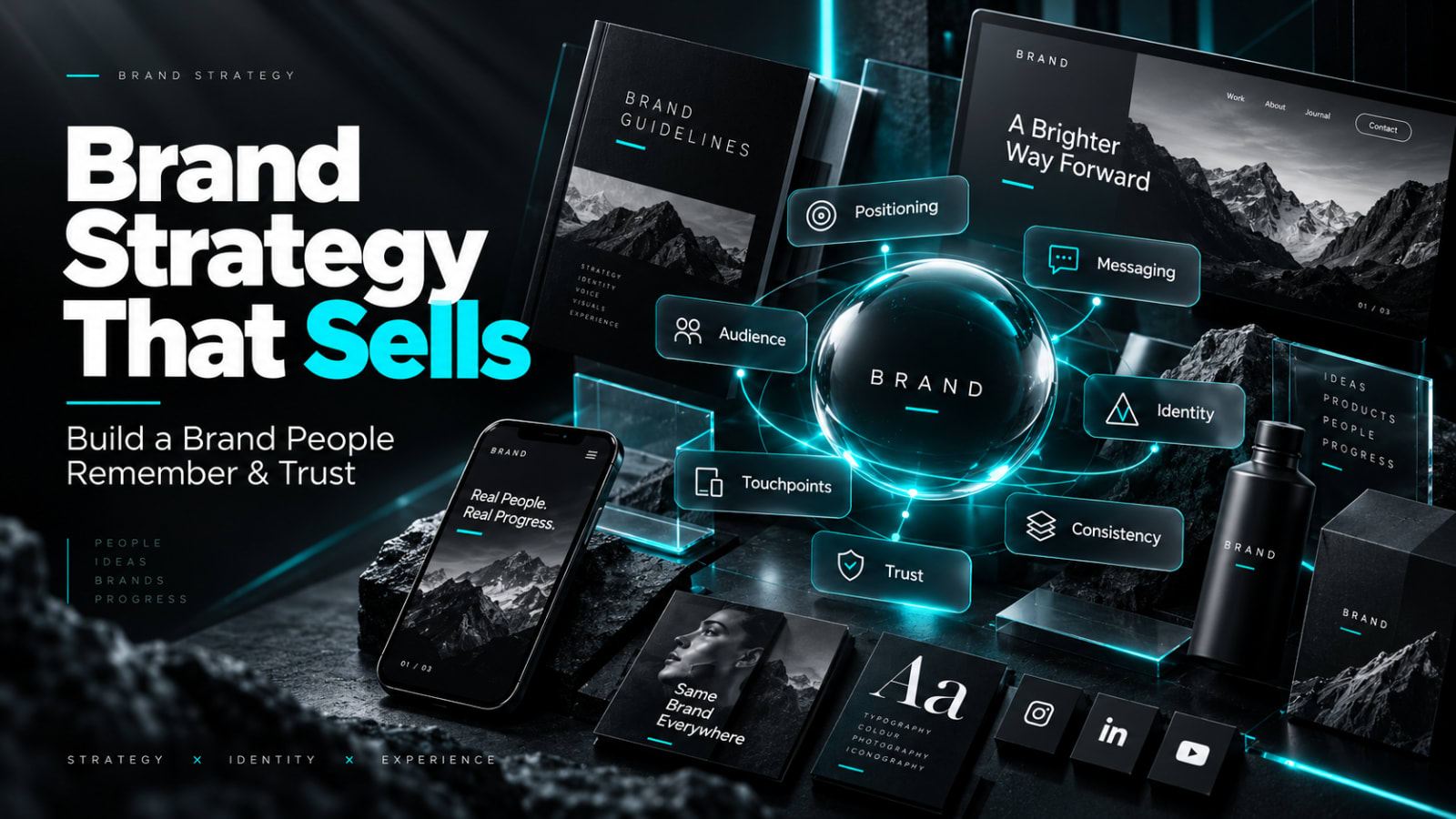
Brand strategy is the set of decisions that creates that clarity. It defines who you are for, what you want to be known for, how you communicate and how the experience should feel across every touchpoint.
What is brand strategy?
Brand strategy is the long-term framework that guides positioning, messaging, identity and customer experience. It helps a business answer questions such as: Who is our ideal customer? What problem are we best positioned to solve? Why should someone choose us instead of an alternative? What should people remember after they interact with us?
Without these answers, branding becomes a collection of disconnected design choices. With them, design has a job to do.
1. Define the position you want to own
Good positioning is specific. “High quality,” “customer focused” and “innovative” are rarely enough because almost every competitor can say the same thing. Look for a position that connects a real customer need with a strength your business can consistently deliver.
A local cafe may position around speed for office crowds, a premium bakery around gifting and presentation, or a marketing agency around strategy-led creative execution. The position should make future decisions easier - not just sound impressive in a presentation.
2. Know who the brand is talking to
A brand for everyone usually becomes memorable to no one. Define the customer context: what they are trying to achieve, what frustrates them, what alternatives they compare and what creates confidence before purchase.
This understanding improves more than advertising. It shapes website copy, service packages, visual style, sales conversations, content topics and even the type of proof you should show.
3. Build a message people can repeat
Your brand message should be simple enough for a customer to explain to someone else. Clarify the problem, your role, the benefit and the reason to believe. Then adapt that message for different touchpoints without changing the core meaning.
Strong messaging creates consistency between a homepage headline, Instagram bio, proposal, advertisement and sales pitch. Customers should feel like they are meeting the same brand everywhere.
4. Turn strategy into a visual identity system
Once the position and message are clear, visual identity can express them. That includes logo use, typography, color, imagery, graphic elements, layout rules, motion and application examples. The goal is not to make every asset identical. The goal is to make different assets feel unmistakably connected.
This is especially important when a brand appears across social media, packaging, menus, signage, websites, presentations and paid ads. A flexible system creates recognition without becoming repetitive.
5. Design the moments customers actually see
Branding becomes real at touchpoints: a Google result, a reel, a menu, a delivery box, a landing page, a quotation, an email or a physical sign. Map the moments that matter most in the customer journey and make sure the brand feels intentional there.
A beautiful brand guide cannot compensate for a confusing website or inconsistent social feed. Strategy has to survive contact with real execution.
6. Create consistency without becoming boring
Consistency does not mean copying one template forever. It means repeating the brand's recognizable logic: the same tone, design principles, message hierarchy and level of quality. Within that system, campaigns and content can still change.
The strongest brands are recognizable before someone sees the logo because the overall language feels familiar.
A practical brand strategy checklist
- Define your ideal customer and their buying context.
- Write one clear positioning statement.
- Choose 3-4 message pillars your brand should repeatedly own.
- Create a visual identity system, not only a logo file.
- Apply the system to your highest-value touchpoints first.
- Document tone, typography, color and usage rules.
- Review whether the brand still matches the business as it grows.
Frequently asked questions
What comes first: brand strategy or logo design?
Strategy should come first. The logo and visual identity are stronger when they are designed to express a clear position, audience and personality.
Can a small business benefit from brand strategy?
Yes. Smaller businesses often benefit quickly because clear positioning helps them focus limited marketing resources on the right audience and message.
When should a business rebrand?
Consider a rebrand when the current identity no longer matches the business, the positioning has changed, the brand is inconsistent, or customers regularly misunderstand what the company offers.
A logo makes you recognizable. A strategy makes you memorable. KizenClicks brings brand positioning, identity, content, packaging and digital execution into one connected system. Talk to KizenClicks about building a brand designed to be remembered - and chosen.