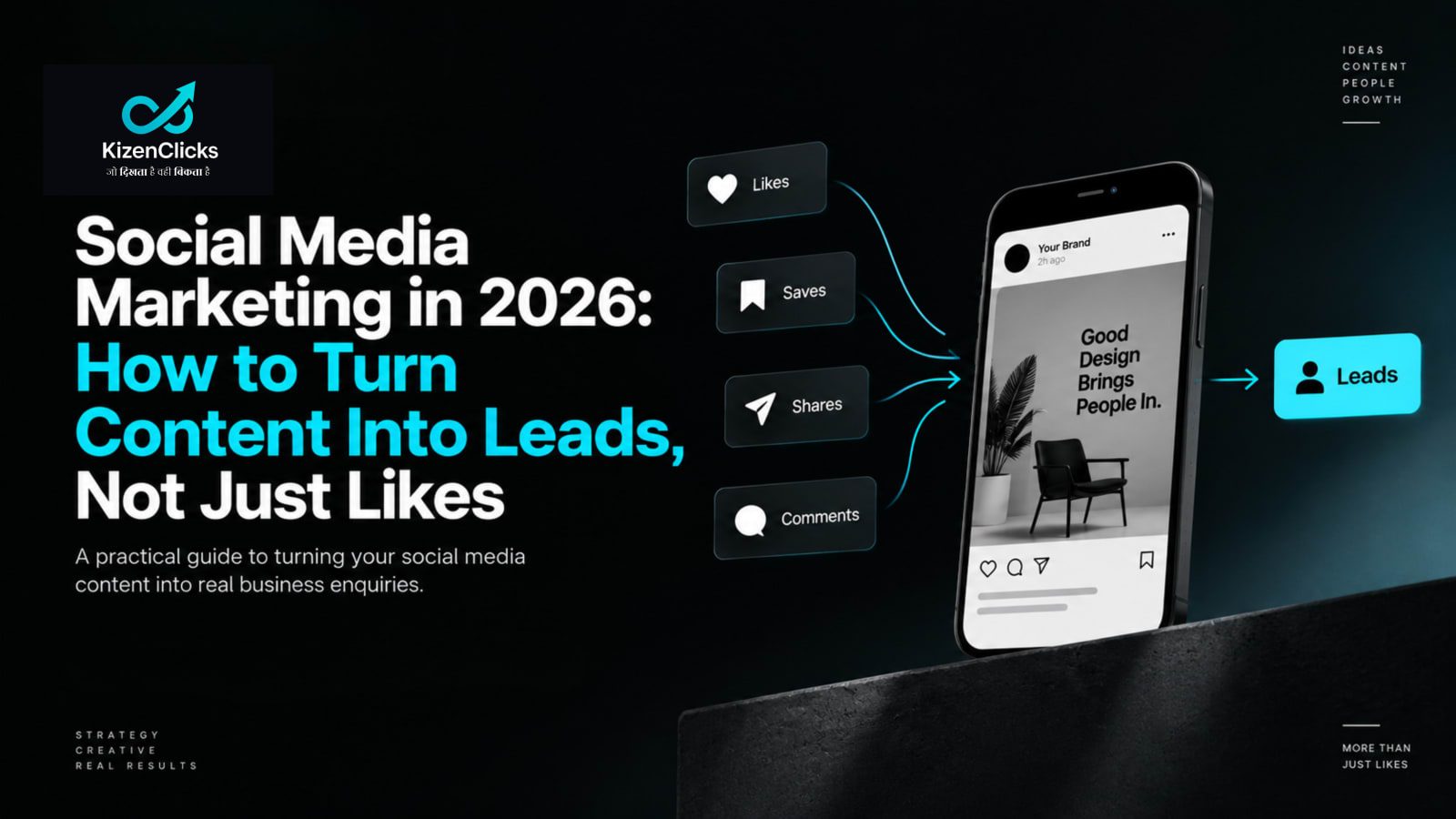
A brand can post five times a week, gain likes and still generate almost no business. That happens because social media activity and social media marketing are not the same thing. Activity fills a feed. Marketing creates a deliberate path from attention to trust, action and enquiry.
In 2026, the strongest social media strategies are built less around “what should we post today?” and more around “what does our audience need to see before they are ready to contact us?”
Start with a conversion path, not a content calendar
Before planning formats, decide what action matters. Should a potential customer visit a service page, send a DM, book a consultation, request pricing or visit a physical location? That destination changes the kind of content you need.
If the goal is leads, your profile, bio, highlights, pinned posts and landing pages should make the next step obvious. Great content loses value when the user reaches a confusing profile or a website that does not explain the offer.
Use content pillars that answer buying questions
Strong content pillars should support the customer journey. A practical mix for many service businesses includes:
- Problem content: show the pain point your audience already recognizes.
- Education: explain how to make a better decision.
- Proof: demonstrate process, results, testimonials or before-and-after thinking.
- Brand: communicate personality, positioning and what makes your approach different.
- Offer: clearly explain what you do and who it is for.
This mix gives people multiple reasons to follow while repeatedly connecting the content back to the service.
Create for retention, not only reach
The first job of a post is to earn attention, but the second is to hold it. Use a clear opening idea, remove unnecessary setup and give the viewer a reason to keep watching or reading. For reels, the first seconds should establish the tension or promise. For carousels, the cover should communicate one specific benefit or curiosity gap.
A useful rule is: one post, one core idea. Trying to explain everything in one piece usually weakens the message.
Build proof into the feed
People do not buy only because a brand looks active. They buy when the brand appears credible and relevant to their situation. Show how you think, how work is created, why a decision was made and what changed after implementation.
Proof does not have to mean dramatic numbers. It can be a client quote, a packaging transformation, a website redesign, a campaign breakdown, a behind-the-scenes process or a clear explanation of how you solved a common problem.
Use CTAs that match the stage of awareness
“DM us now” on every post quickly becomes background noise. Match the call to action to the content. Educational posts can invite saves or a related guide. Comparison posts can point to a service page. High-intent posts can ask for a message, consultation or brief.
When the CTA feels like the logical next step, it creates less resistance.
Measure the signals that connect to business
Reach and likes are useful context, but they are not the full result. Track profile visits, website clicks, qualified DMs, lead form submissions, booked calls and enquiries by source. Then look backward: which topics, formats and creative patterns repeatedly influence those actions?
This is how a social media strategy becomes a learning system instead of a posting routine.
A simple monthly social media system
- Choose one commercial goal for the month.
- Define 3-5 content pillars around audience questions.
- Create a mix of reels, carousels, static posts and stories.
- Include proof every week.
- Build at least one clear conversion post each week.
- Review leads and actions, not only engagement.
- Repeat the ideas that create qualified interest.
Frequently asked questions
How often should a business post on social media?
Consistency matters more than forcing a specific number. Choose a frequency your team can maintain while protecting quality, then use performance data to refine it.
Do reels generate more leads than static posts?
No single format wins in every case. Reels can expand reach, while carousels, stories and proof-led posts may build understanding and trust. The best mix depends on the offer and audience.
What should I improve first if social media is not generating leads?
Check the whole path: positioning, profile clarity, content topics, proof, CTA and the landing page. The problem is often between those steps rather than inside one post.
Your content should do more than fill the feed. KizenClicks combines social strategy, design, reels, content production and paid media to build a clearer path from attention to action. Talk to KizenClicks about a social media system built around your business goals.